
Note: As a general rule of the human condition, we like to hold, pet, and otherwise bother our pets. If you are looking for a pet that enjoys or at least tolerates this treatment well, a chameleon is not the pet for you.
Jackson’s chameleons are best as elegant display animals rather than a “pet” that gets taken out regularly. That being said, making the effort to tame your chameleon is still important.
Sure, you can leave them alone their whole life, but what will happen if you need to clean the enclosure, move house, or take your cham to the vet? I can’t speak from experience, but it doesn’t take a rocket scientist to know that a tame chameleon is much easier to handle than a wild one.
Step 1. After bringing your chameleon home, leave it alone for a 1-2 weeks. Make sure it’s healthy, eating, and drinking during this time. Feel free to watch and admire, but don’t touch. Wait for your cham to fully adjust to its environment before introducing yourself.
Step 2. Introduce yourself with food. As Olimpia Martinotti puts it: “Chameleons are like men; the best way to their hearts is through their stomachs.” Hold a prey item in your hand or a pair of silicone-tipped tweezers. It may take a while for the cham to decide to take it. Do it during the first feeding of the day, when they are most hungry. Don’t stare directly at the cham; this makes them nervous. And be sure to hold the bug at least 6” away so you’re not directly in their space.
Step 3. Once your chameleon regularly takes food from your hands/tongs, encourage it to come to you. Olimpia Martinotti’s method is to place a tall decorative tree in front of an open enclosure and let the cham wander out on its own. (This can take a while.) When it’s comfortable on the tree, offer your hand as a perch.
Step 4. Never grab your chameleon out of its enclosure – this is predatory behavior and will damage the trust relationship. Furthermore, due to chameleons’ unique anatomy, grabbing them will break their very delicate ribs! Instead, hold out your hand and let them come to you on their own terms.
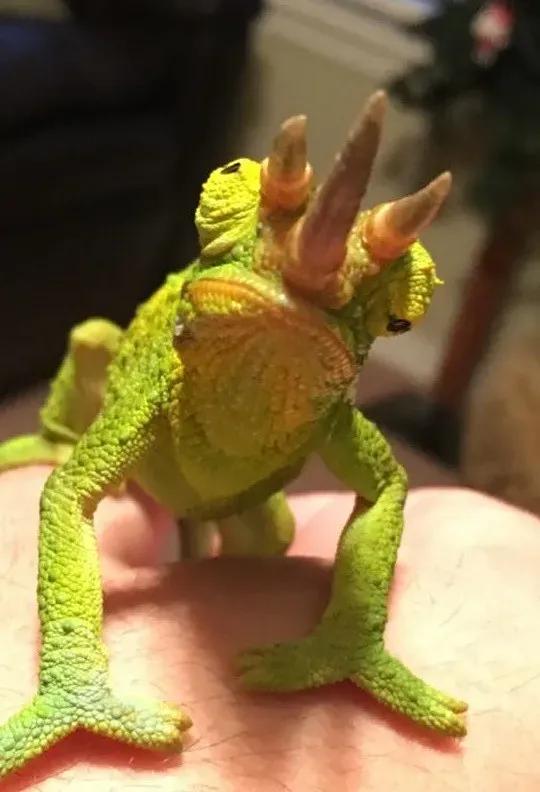
Contributed by Joseph Martin
Always associate handling with good things, like a chance to climb in a plant in a sunny window, a tasty bug snack, or some supervised time outside. Handling is a stressful experience, but fortunately chameleons can be bribed.
Once your chameleon has become hand-tame, gradually increase length of time until you’ve determined the cham’s threshold. This will vary from individual to individual. Some don’t like handling at all, while others don’t seem to mind at all — even seeming to welcome an opportunity to explore. Always respect your cham’s preference. If you want one that likes to be handled, it’s best to buy an adult whose disposition is already known.
As you handle your chameleon, keep your movements slow, and never restrain it, instead allowing it to walk from one hand to another.
Jackson’s chameleons can be held carefully for short periods of time (like posting a beautiful pic to Instagram or showing off to guests), but even the most “social” chams shouldn’t be out for longer than 5-10 minutes 1-2x/week.
Many people are concerned about the correlation between reptiles and salmonella. The truth is, unless you’re very old or very young, you are very unlikely to get salmonella from your pet chameleon. In fact, they’re more likely to get sick from you than you are from them. So as long as you keep your cham’s cage clean and wash your hands before and after contact, you’ll be fine. For more information, read Reptiles and Salmonella: Should You Be Worried?
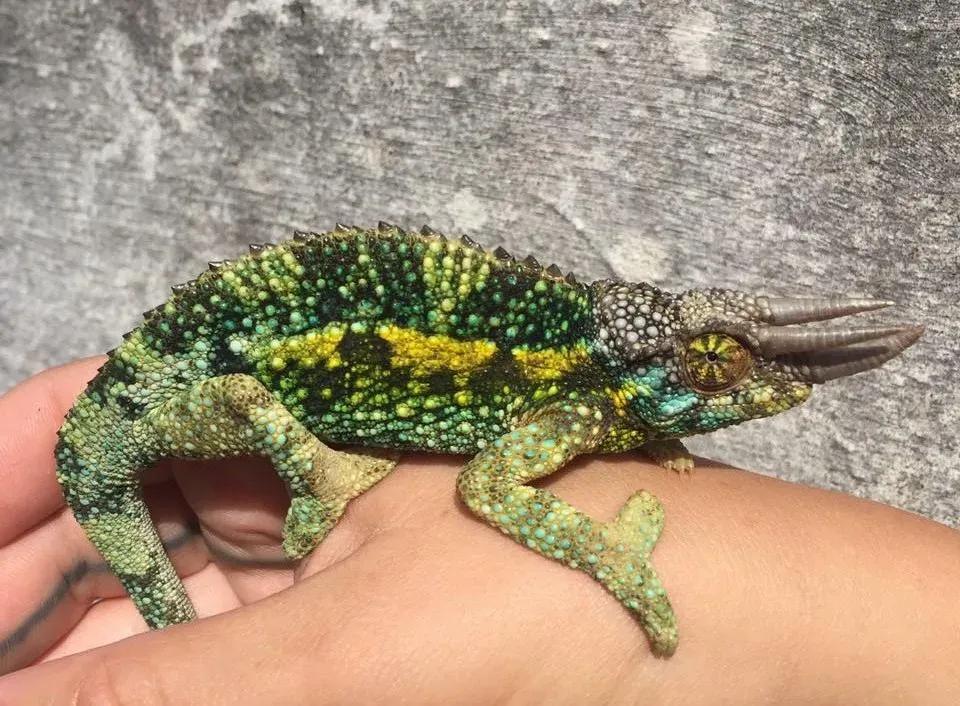
Contributed by Stacey Vandenhoudt
It’s hard to say what will be the “right” color for your Jackson’s chameleon, as each has slightly different coloration and patterning. However, learning how to discern differences in your cham’s color and pattern will offer insight into its mood and health.
Aside from changing color, other Jackson’s chameleon behaviors are usually associated with threat displays:

Female T. j. jacksonii demonstrating dull and bright coloration. Contributed by Petr Necas.
Jackson’s chameleons tend to be more defensive/aggressive when they are young. Some grow out of it after a year or so, but others don’t and you just have to respect that. If you are concerned about being bitten by a particularly feisty chameleon, wear a pair of light gloves when handling is necessary.