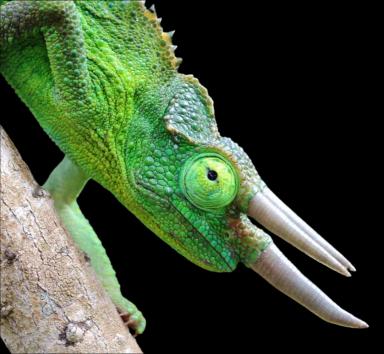
Decorating your Jackson’s chameleon’s enclosure is about more than just your taste in interior design. The items you add enhance your pet’s quality of life by mimicking their natural habitat, encouraging exercise, and stimulating natural behaviors. The best zoos do this all the time — ever heard of environmental enrichment? Reptiles are not stupid, simple creatures that “do best in minimalistic enclosures,” and modern reptile care experts are working to banish minimalistic husbandry. Read more about it here: Environmental Enrichment for Reptiles: What? Why? and How?
Jackson’s chameleons are naturally very active, and will use every inch of their enclosure that you make accessible to them. And even then, they will still climb on the screen walls from time to time. As you arrange the following elements, do your best to maximize the enclosure’s available space.
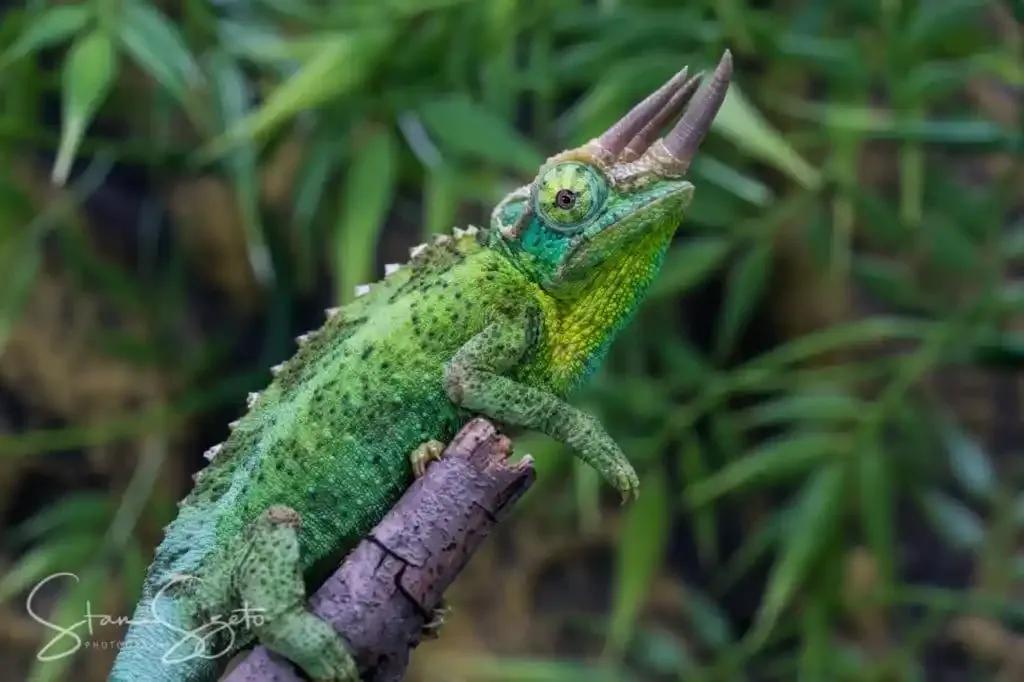
Contributed by Stan Szeto
Cork tubes, grapevines, wood dowels, and slim natural branches can be used to create the main structure of your chameleon’s “jungle gym.” Place them so they crisscross over and under each other. This will help maximize the usable space in your enclosure. Secure the branches in place with zip ties or fishing line. Fishing line or push pins can also be used to secure items from the outside.
Branches can also be collected from outside in areas that haven’t been treated with chemicals. Scrub and wash the branch first, then let dry. Sterilizing via boiling water or baking is not necessary, and can actually do more harm than good by destroying the natural bactericides in the wood.
Vines create secondary structure between branches. However, natural vines should only be used, if you can find them — artificial vines are extremely dangerous and should never be used for chameleons.
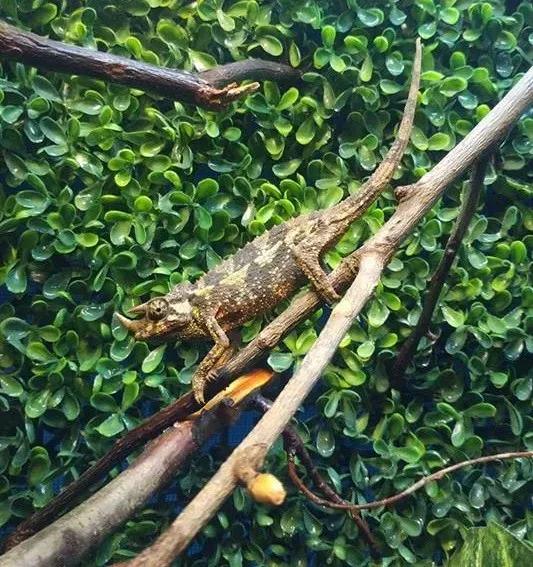
Contributed by Gabby Burkhamer
Plants add a beautiful touch of color to a chameleon enclosure, and more importantly, their foliage provides places for a chameleon to hide. While it may seem counterintuitive to provide hiding places for a reptile that you want to be able to watch, you will find that the more cover you provide, the more your will see of your Jackson’s chameleon. This is because when a reptile knows that a good hiding spot is just a few steps away, they feel more comfortable hanging out in the open. So don’t be afraid to use lots and lots of foliage in your enclosure!
See more at FLChams.com
PRO TIP: Use an Arcadia Jungle Dawn grow light to maximize the health and attractiveness of the live plants in your enclosure.
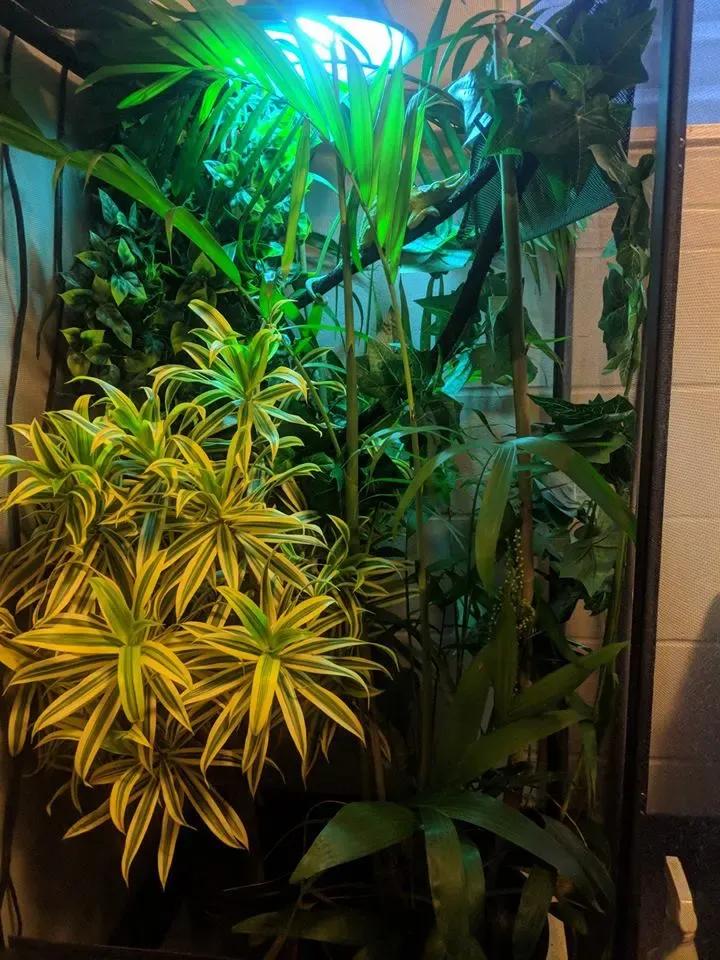
Contributed by Caroline Skinner
The best inspiration for how to decorate your chameleon’s enclosure will come from pictures of its natural habitat. But if you’re feeling lost, there’s a helpful diagram of the parts of a functional chameleon enclosure here. This thread from the Chameleon Forums also offers a variety of enclosure pictures contributed by many different keepers.