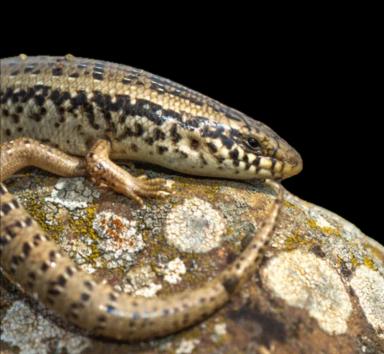
Several of these sources were helpful in the creation of this guide and can be used by the reader as additional sources of ocellated skink-specific information:
Al-Sadoon, M. K., & Spellerberg, I. F. (1987). Metabolism of the lizard Chalcides ocellatus (Forskal) from Egypt. Journal of Arid Environments, 2, 159–168. https://doi.org/10.1016/s0140-1963(18)31186-8
Attum, O., Eason, P., & Cobbs, G. (2007). Morphology, niche segregation, and escape tactics in a sand dune lizard community. Journal of Arid Environments, 4, 564–573. https://doi.org/10.1016/j.jaridenv.2006.07.010
Boulenger, G. A. (1890). LVI.—On the varieties of Chalcides ocellatus, Forsk. Annals and Magazine of Natural History, 30, 444–445. https://doi.org/10.1080/00222939009460860
Bozkurt, Emin & Avci, Aziz & YILMAZ, Can. (2015). A new locality record of Chalcides ocellatus (Forskal, 1775) (Sauria: Scincidae)from southeastern Anatolia, Turkey. TURKISH JOURNAL OF ZOOLOGY. 39. 344-348. 10.3906/zoo-1402-42.
Brandley, M. C., Young, R. L., Warren, D. L., Thompson, M. B., & Wagner, G. P. (2012). Uterine Gene Expression in the Live-Bearing Lizard, Chalcides ocellatus, Reveals Convergence of Squamate Reptile and Mammalian Pregnancy Mechanisms. Genome Biology and Evolution, 3, 394–411. https://doi.org/10.1093/gbe/evs013
Capula, M., & Luiselli, L. (1994). Resource partitioning in a Mediterranean lizard community. Bolletino Di Zoologia, 2, 173–177. https://doi.org/10.1080/11250009409355879
Carretero, M., Cascio, P.L., Corti, C., & Pasta, S. (2010). Sharing resources in a tiny Mediterranean island? Comparative diets of Chalcides ocellatus and Podarcis filfolensis in Lampione. Bonn zoological Bulletin, 57, 111-118.
Catena, A., & Hembreee, D. (2014). Swimming through the substrate: the neoichnology of Chalcides ocellatus and biogenic structures of sand-swimming vertebrates. Palaeontologia Electronica. https://doi.org/10.26879/463
Çiçek, K., & Göçmen, B. (2013). Food composition of Ocellated Skink, Chalcides ocellatus (Forskal, 1775) (Squamata: Scincidae), from the Cyprus Island. Acta Herpetologica, Vol 8 No 2 (2013). https://doi.org/10.13128/ACTA_HERPETOL-13404
Civantos, E., Arribas, R., & Martín, J. (2020). Niche occupancy of two (congeneric) skinks in an islands environment. Amphibia-Reptilia, 3, 337–347. https://doi.org/10.1163/15685381-bja10002
Graves, B. M., & Halpern, M. (1990). Roles of vomeronasal organ chemoreception in tongue flicking, exploratory and feeding behaviour of the lizard, Chalcides ocellatus. Animal Behaviour, 4, 692–698. https://doi.org/10.1016/s0003-3472(05)80380-x
Daut, E.F., & Andrews, R. (1993). The Effect of Pregnancy on Thermoregulatory Behavior of the Viviparous Lizard Chalcides ocellatus. Journal of Herpetology, 27, 6-13.
Grimmond, N. & Preest, M. & Pough, F. Harvey. (1994). Energetic Cost of Feeding on Different Kinds of Prey for the Lizard Chalcides ocellatus. Functional Ecology. 8. 17. 10.2307/2390106.
Gunn, J. & Bowker, R. & Sullivan, K.O. & Sullivan, B.K.. (2012). An old world skink, chalcides ocellatus, with a long history of anthropogenically assisted dispersal, now established in mesa, arizona, USA. Herpetological Review. 43. 551-553.
Kapsalas, G., Deimezis-Tsikoutas, A., Georgakopoulos, T., Gkourtsouli-Antoniadou, I., Papadaki, K., Vassaki, K., & Pafilis, P. (2018). How effectively do European skinks thermoregulate? Evidence from Chalcides ocellatus, a common but overlooked Mediterranean lizard. Acta Herpetologica, 13(1), 75+.
Kornilios, P., Kyriazi, P., Poulakakis, N., Kumlutaş, Y., Ilgaz, Ç., Mylonas, M., & Lymberakis, P. (2010). Phylogeography of the ocellated skink Chalcides ocellatus (Squamata, Scincidae), with the use of mtDNA sequences: A hitch-hiker’s guide to the Mediterranean. Molecular Phylogenetics and Evolution, 2, 445–456. https://doi.org/10.1016/j.ympev.2009.09.015
Lipari, L., Gerbino, A., Farina, E., Carini, F., & Lipari, A. (2015). The Parietal Eye in Reptile, Chalcides Ocellatus: An Embryological and Histological Study. Veterinary Research, 8(3), 27–31.
Meiri, Shai & Itescu, Yuval & Schwarz, Rachel & Slavenko, Alex & Pafilis, Panayiotis. (2016). A new island record for Chalcides ocellatus (FORSKAL, 1775) from Kythnos, Greece. Herpetozoa. 29. 98-100.
Mermer, Ahmet & Kumaş, Meltem & Mutlu, Hasan & Çiçek, Kerim. (2020). Age structure of a population of Chalcides ocellatus (Forskål, 1775) (Sauria: Scincidae) in Mediterranean Anatolia. Zoology in the Middle East. 66. 1-8. 10.1080/09397140.2020.1781362.
Nouira, S., & Kalboussi, M. (2004). Comparative diet of northern and southern Tunisian populations of Chalcides ocellatus (Forskal, 1775).
Pasteur, G. (1981). A Survey of the Species Groups of the Old World Scincid Genus Chalcides. Journal of Herpetology, 15, 1.
Saad, A.-H., & El Ridi, R. (1984). Mixed Leukocyte Reaction, Graft-Versus-Host Reaction, and Skin Allograft Rejection in the Lizard, Chalcides ocellatus. Immunobiology, 4–5, 484–493. https://doi.org/10.1016/s0171-2985(84)80025-x
Skelton, T.M., Waran, N., & Young, R. (1996). Assessment of Motivation in the Lizard, Chalcides Ocellatus. Animal Welfare, 5, 63-69.
Taylor, D. J., Titus-Mcquillan, J., & Bauer, A. M. (2012). Diet of Chalcides ocellatus(Squamata: Scincidae) from Southern Egypt. Bulletin of the Peabody Museum of Natural History, 2, 383–388. https://doi.org/10.3374/014.053.0204
Special thanks to the following breeders and experienced keepers for their contributions to this guide: Francis Cosquieri, Dave Clemens, Garry Dorrell, and Jeff Littlejohn.