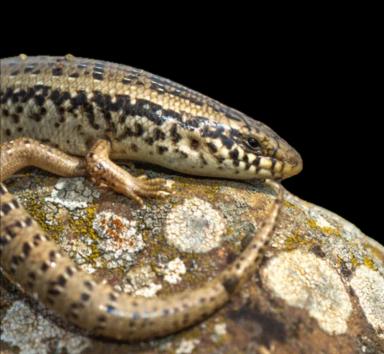
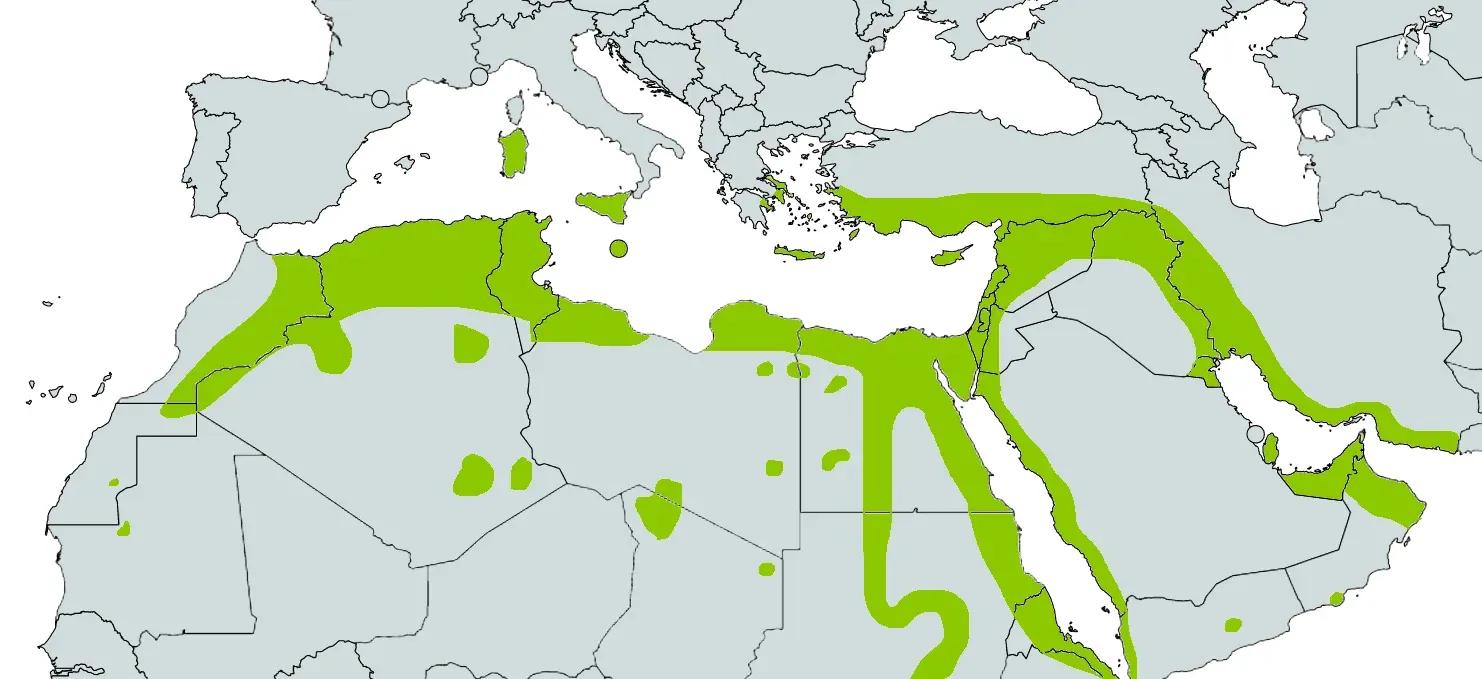
The ocellated skink (also known as the ocellated bronze skink or eyed skink) is a diurnal, semi-fossorial lizard native to the Mediterranean coast. This skink is extremely widespread — aside from being found just about anywhere around the Mediterranean Sea, it can also be found in western Africa and the Arabian peninsula. The ocellated skink is also established as an invasive species in France and the United States (Florida, Arizona) (Gunn et al., 2012). Although highly adaptable, they generally prefer arid habitats with sandy to stony soil and sparse vegetation.
Ocellated skinks have a cone-shaped head, long cylindrical body, short limbs, long toes on the hind feet, a tapered tail, black eyes, and smooth, glossy scales. Although pattern varies from population to population, most ocellated skinks in the US pet trade generally have a bronze or tan base color with a pale belly. They have a pattern of black and while ocelli on the back, and black bars traversing the lips up to the cheek. Limbs are usually patternless. They are fairly small, usually with a total length between 7-9” (17-23 cm) (Gunn et al., 2012).
Ocellated skinks are insectivorous, which means that they get most of their nutrition from insects, although they have been recorded eating occasional plant matter such as fruit. In the wild, they have an extremely diverse diet, including grasshoppers, locusts, crickets, ants, beetles, isopods, spiders, centipedes, and insect larvae (Taylor et al., 2012; Çiçek & Göçmen, 2013).
As pets, ocellated skinks are generally quite hardy and easy to care for, and they don’t take up too much space due to their small size. Of course, hardiness doesn’t mean that you can/should cut corners on their husbandry! This species is not very handleable, but they still tend to have lively, curious personalities which make them fun to watch and interact with.
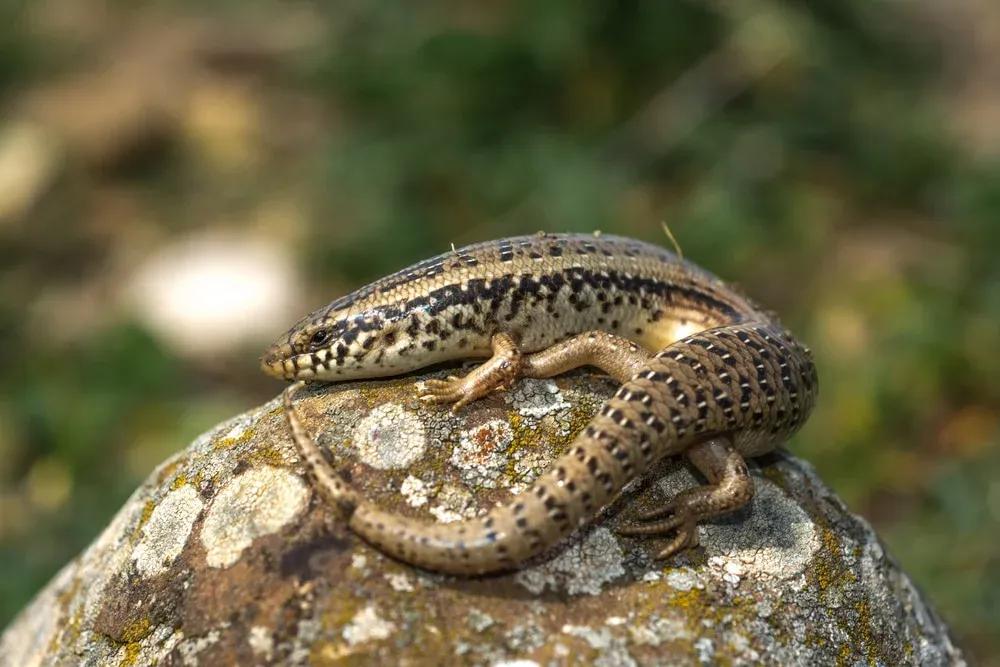
Photo courtesy of Shutterstock