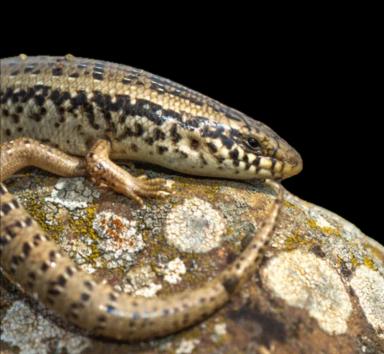
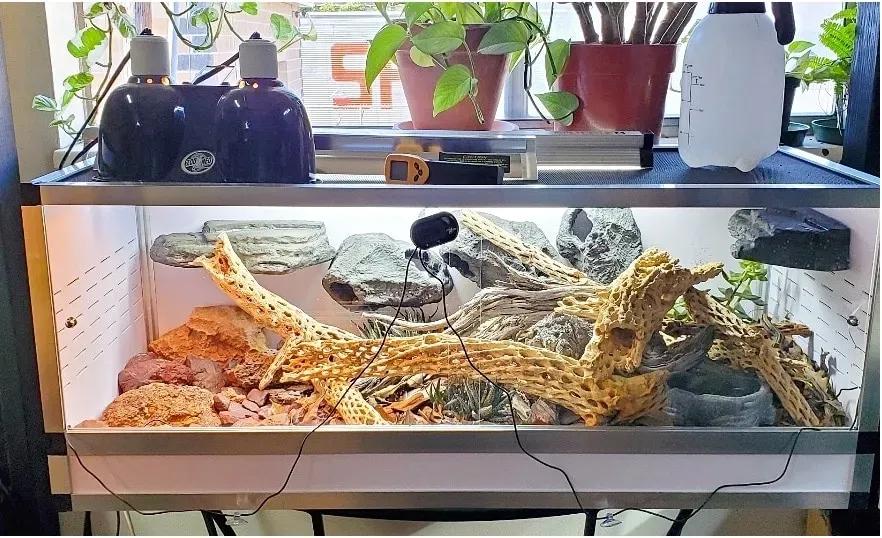
There’s no formula for determining the “perfect” ocellated skink enclosure size. In nature, there’s no such thing as enclosures. Instead, these lizards travel all over the place in their hunt for food and (in the case of males) mates. I have not found any measurements of this species’ average territory size, but I have spent time observing small, insectivorous lizards in an arid habitat. Those lizards can easily traverse an area the size of your average bedroom within an hour — in other words, it’s near impossible to provide too large of an enclosure as long as sufficient resources are provided.
So here’s a different question:
To answer that question, let’s consider their natural history and behavior. Ocellated skinks are semi-fossorial, which means that they spend a significant portion of their lives underground. However it also means that they spend a significant portion of their lives on top of the ground, too. As pets, this means that they are most likely to thrive in a horizontally-oriented enclosure with more floor space than height. However, they are capable climbers, so providing some height is important for accommodating environmental enrichment options which promote that behavior.
Aside from paying attention to the skink’s natural history, it’s also helpful to look at those who have successfully kept this species, observe what size those keepers used, and use that data as a starting point for determining what is likely to be an appropriately-sized enclosure for an ocellated skink.
A long-term ocellated skink enclosure must meet the following requirements:
I also recommend using a front-opening enclosure, as this makes access and regular maintenance much easier. It’s also less likely to stress out the skink and more likely to facilitate bonding interactions between you and your pet.
According to data from other keepers, as well as my own experience in keeping ocellated skinks, one ocellated skink should be kept in no smaller than a 30”L x 12”W x 12”H (75 x 30 x 30 cm) enclosure, or 20 US gallons. Keep in mind that this is the MINIMUM, and larger is always better!
In theory, yes, as this is fairly common practice. However, they don’t seem to be dependent on routine social interaction. So you can also keep just one skink by itself, and it’s likely to be perfectly happy as long as you supply plenty of enrichment for stimulation.
It should be noted that there is no mention of social behavior in Chalcides ocellatus in The Secret Social Lives of Reptiles by J. Sean Doody et al., which is a fairly comprehensive compilation of documented social tendencies in reptiles. Furthermore, breeder Jeff Littlejohn has observed violent behavior from pregnant females toward males, males toward other males, males toward juveniles, and females toward other adult females. This could be related to the size of the enclosure and number of resources such as basking opportunities and hiding places available. It has been my own observation that the more crowded the enclosure becomes, the more frequently conflicts seem to occur.
In other words, keep a group of ocellated skinks at your own risk. If you want to try it, there are a few rules you need to follow to maximize your likelihood of success:
Ocellated skinks are notoriously difficult to sex, which means that it’s quite possible that the breeder or store that you buy yours from will not be able to guarantee sex. If you are unwilling/unable to closely observe your skinks for signs of conflict that will clue you in to their sex and be ready to separate them immediately, then it’s safest to keep only one skink per enclosure.
How much larger does the enclosure need to be? In my experience, adding an extra 200 square inches (1300 square centimeters) of floor space (or more!) per extra skink seems to work well. This works out to an extra ~10 US gallons/38 liters of volume, provided that you are using a “terrestrial” style enclosure.
When in doubt, go larger rather than smaller! Overcrowding is the most common cause of conflict within ocellated skink colonies, and may even result in cannibalism. Juveniles are particularly vulnerable to attacks from adults when they don’t have enough space or opportunities to escape (Carretero et al., 2010).
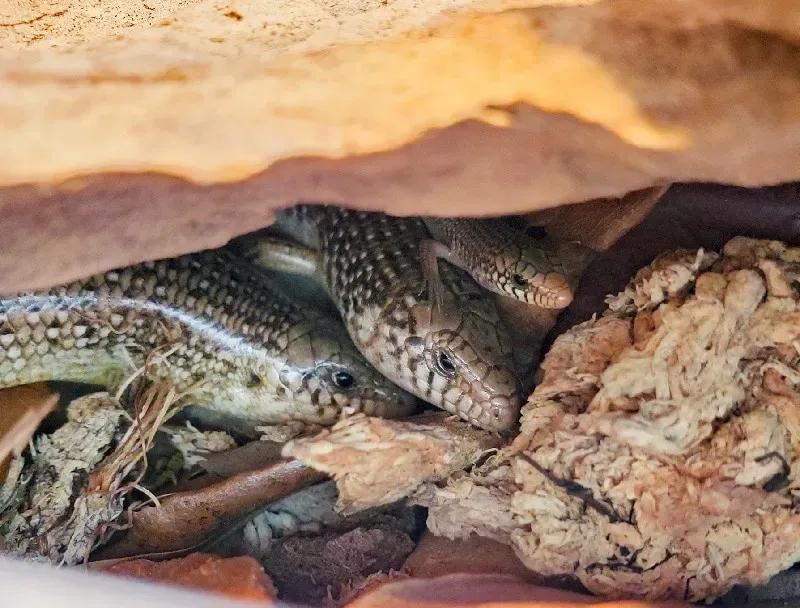
Larger is always better, but here’s my baseline recommendations depending on how many skinks you want to keep.
1 skink
2-3 skinks
4-6 skinks
*recommended only with “2 square screens” top option
SUMMARY —
This page contains affiliate links.