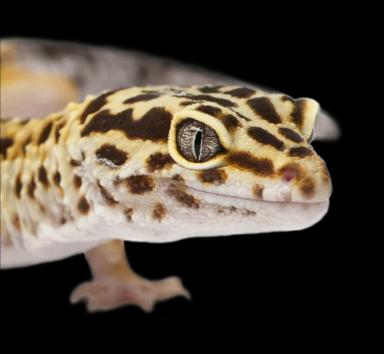
Leopard geckos, like all reptiles, need a temperature gradient in their terrarium for best health.
At night, leopard geckos can tolerate a drop in temperature down to 60°F (16°C). Studies show that a nightly drop in temperature is healthier than maintaining the same temperatures as during the day, and is greatly beneficial for a reptile’s long-term health. If your home is very cold and you need to provide a nighttime heat source, do not use a colored night heat bulb. Contrary to popular belief, reptiles do see the light from these bulbs and it can disrupt their sleep/wake cycle. A better alternative is a ceramic heat emitter mounted inside of a wire cage-type fixture. CHEs are very good at increasing ambient (air) temperature inside of a cold enclosure.
Leopard geckos prefer to hide in warm shelters during the daytime, using their warmth to “charge” themselves for nighttime activity. Ideally a leopard gecko should have minimum 2 hides placed at different spots around the enclosure to facilitate thermoregulation: one on the warm end near the heat source, and one on the cool end.
PRO TIP: Pinpoint your surface temperature gradient with a temperature gun like the Etekcity Lasergrip 774. They’re the most precise option on the market — plus fun to use!
BEST: Halogen Heat Lamps
In nature, warmth is delivered to reptiles from the sun (above), and they will retreat underground to get cooler, not warmer. Heat lamps supply heat in a way that works with a leopard gecko’s instincts, replicating nature in captivity. Halogen bulbs are particularly excellent because they produce Infrared A and Infrared B, which are the same wavelengths of heat produced by the sun. These wavelengths penetrate deep into your gecko’s body, providing a more efficient form of heating and reducing the amount of time your gecko needs to bask.
Choosing which bulb to use can be tricky, since wattage and brand determine how much heat it will produce. These are my preferred heat bulbs for leopard geckos in an 18″ / 45cm tall enclosure:
Some experimentation will be required to figure out the right wattage for your setup, as basking temp results vary based on distance and room temperature. Using a dimmer can be helpful to slightly reduce heat output as needed.
Once you have a heat bulb, you will need a lamp to put it in. My favorite is Fluker’s 5.5″ dimmable lamp. The ceramic socket helps make sure that the bulb doesn’t get too hot for the lamp (risking electrical fire), and the dimmable feature enables you to dial down the bulb’s heat output if it gets too warm. Make sure to pay attention to the maximum wattage rating on the lamp!
GOOD: Deep Heat Projectors
Deep heat projectors can be used to warm your leopard gecko’s enclosure during the day or night. They produce primarily Infrared-B and -C heat wavelengths, making them the best lightless heating alternative to incandescent heat bulbs. (For contrast, ceramic heat emitters only produce Infrared-C, which is the weakest infrared wavelength.)
Note: DHPs must be connected to a proportional (dimming) thermostat to make sure that they don’t get too hot. I recommend the Herpstat 1 for this purpose.
What about belly heat?
If you’re concerned about the people who have told you that leopard geckos need “belly heat,” you can relax. What people are talking about is actually making sure that the gecko’s digestive tract gets the heat energy required for proper digestion. As long as the gecko has an appropriate basking area (and preferably a warm hide) that achieves temperatures of 90-92°F as measured by a digital probe thermometer or temperature gun, then they will get the energy they need for healthy digestion.
If you’re still worried, place a flat piece of stone (like slate tile or flagstone) under the heat source. The stone warms up during the day, and then the gecko can warm itself on it at night. This is what they do in nature, and it works great.
OKAY: Heat mats
Heat mats were once the go-to way to heat a leopard gecko enclosure. We have better options now (see above), but heat mats can still be helpful for controlling the temperature of your gecko’s warm hide.
If your warm hide is not getting warm enough, add a thermostat-regulated heat mat under the hide box, covered with 1” of substrate to prevent direct contact. Place the thermostat probe inside the warm hide to regulate temperature.
Heat mats only work properly when they are controlled by a thermostat! Heat rocks and non-thermostat-controlled heat mats run the risk of burning your gecko, so don’t risk it. Non-proportional thermostats like the Inkbird ITC-306T+Standard Probe Temperature Controller work well for regulating heat mats.
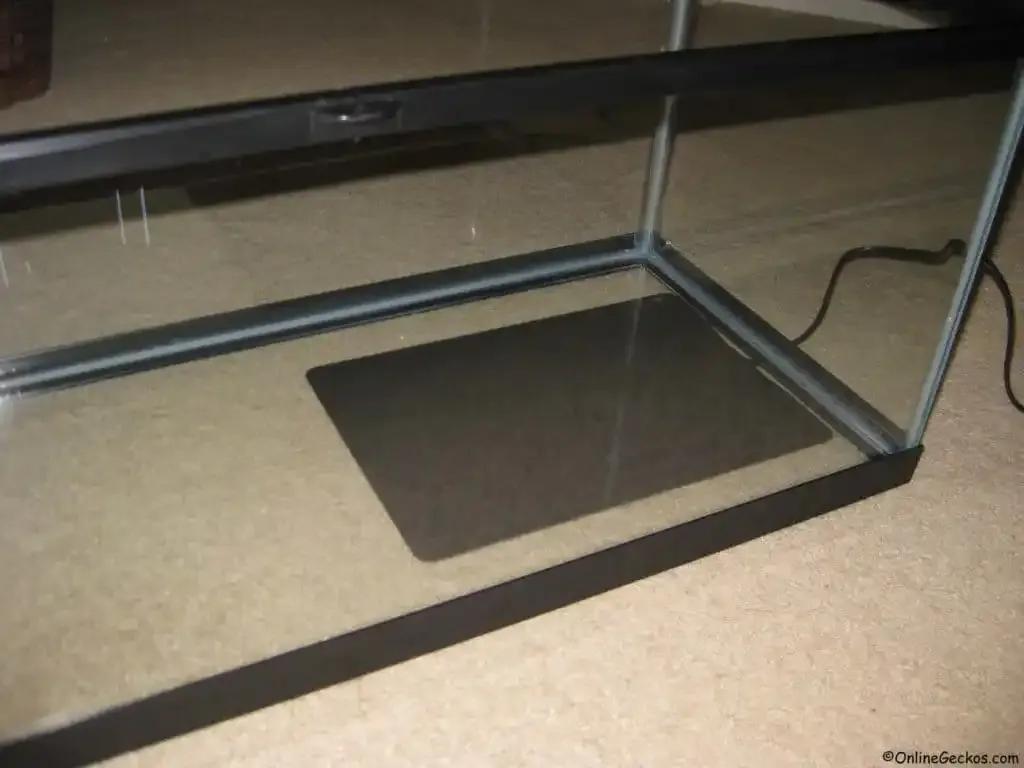
Don’t forget to use spacers to lift the tank .5″ off the ground, which will help prevent malfunctions. Source: OnlineGeckos.com.
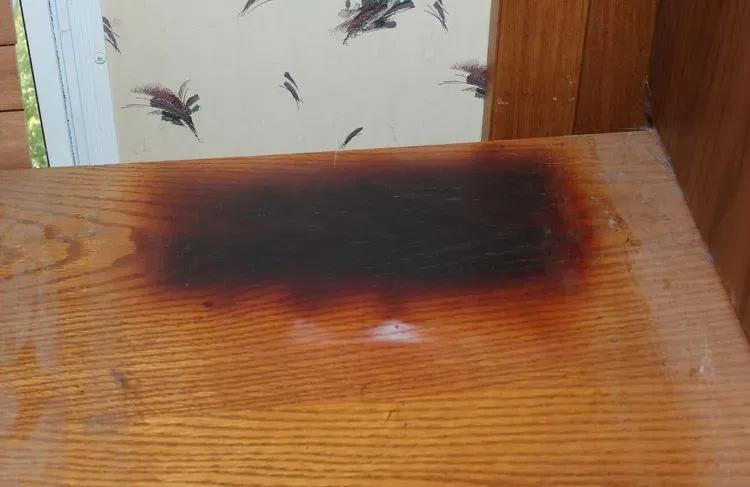
This scorch mark was caused by a heat mat. Always use a thermostat!!! Source: ReptileForums.net.