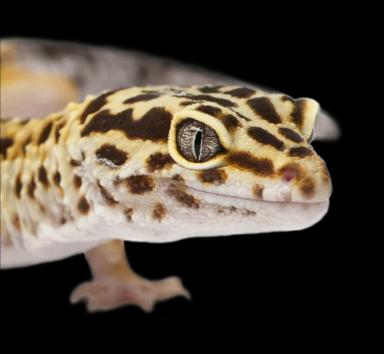

Leopard geckos are a crepuscular, ground-dwelling lizard native to semi-desert and arid grassland areas of Afghanistan, Pakistan, India, and Nepal. The spotted pattern which serves as their namesake also serves as camouflage among the packed earth, rocks, dry grasses, and shrubs characteristic to the landscape. However as of 2019, they have also been found in dry, forested areas of Nepal.
Wild leopard geckos can be found in holes, crevices, under stones, and under a tree’s loose bark. They are particularly fond of living in old stone walls.
They are 7-10″ (17-25 cm) long, with females generally being smaller. In captivity leopard geckos are known to live long lives: 15-20 years on average.
Leopard geckos are insectivores, which means that they eat primarily insects. In the wild, they eat beetles, grasshoppers, spiders, scorpions, and centipedes. They have also been observed preying on caterpillars, pinky mice, newborn birds, as well as smaller snakes and lizards.
Unlike most geckos, leopard geckos are unable to climb vertical surfaces due to the absence of setae on their toes. They also have eyelids, eliminating the need for using their tongue to clean their eyes—another characteristic gecko behavior. However, they are able to detach and regrow their tail if needed.
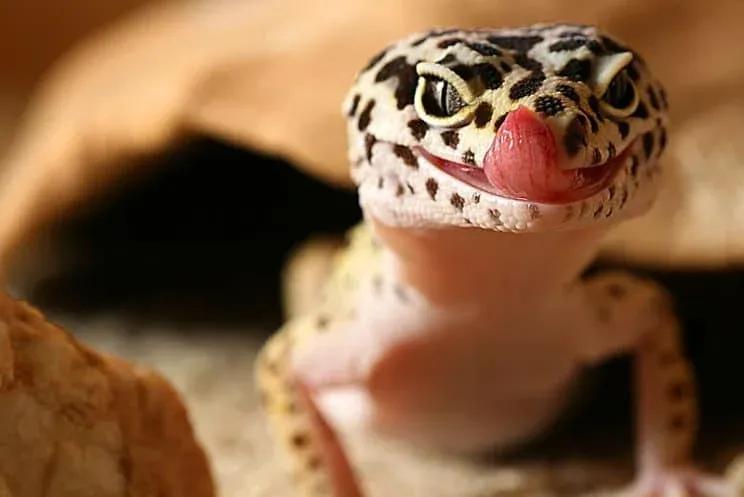
Source: Eublepharis macularius by Eduardo Santos. CC-BY-2.0 via Wikimedia Commons.
***
If you are planning on a leopard gecko as a pet, PLEASE strongly consider adopting one from a rescue or your local classifieds before purchasing from a pet store. There are many adorable, wonderful leopard geckos that have been rejected by their owners and need a forever home.
The market is already flooded with leopard geckos. By adopting, you discourage the breeding and sale of more unwanted geckos. Plus, you can often adopt a leo for cheaper than you would buy one in the store. It’s a win-win!
***