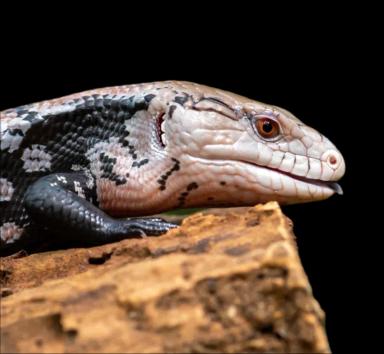
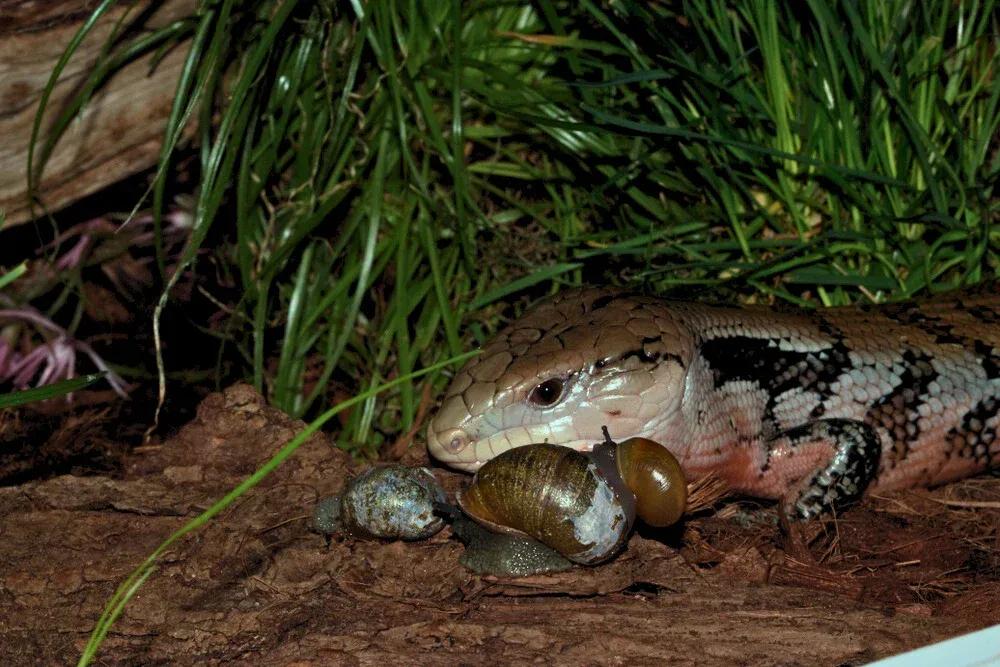
Blue tongue skinks are omnivorous, meaning that they need to eat both plant and animal matter to get the right nutrition. In this section we’ll discuss options for protein, vegetables, and fruit that are safe to feed your pet.
Just like humans, skinks’ nutritional needs change as they grow. And since they’re omnivorous, the key to success with skinks is feeding them as large a variety of foods as possible. But here’s a general guideline, with 1-2 Tbsp. as a serving size (about the same size as their head).
*Adult shingleback skinks should be fed 2x/week due to a low protein diet.
Young skinks (under 12 months) need 70-80% of their diet as protein. Adults should get roughly 50-60%. When young BTS don’t get enough protein in their diet, their scales can become deformed — known as “pyramiding.” When adults get too much protein, they can become overweight and their kidneys can even start to shut down (although the latter is only in extreme cases, and obesity is much more common).
Insects can be fed live or from a can, but letting a skink hunt is good for exercise and mental stimulation (enrichment).
Note: All feeder insects should be gutloaded for at least 24 hours before feeding. Ideally, they should come pre-gutloaded from the breeder. If they weren’t, or you buy your feeder insects in bulk, the easiest way to gutload them prior to feeding is with reconstituted Arcadia EarthPro InsectFuel or Repashy Superload.
If you need to keep your feeders long-term, nutritious insect diets include Dubia Diet and Repashy Bug Burger.
High-quality feeders for your blue tongue skink can be purchased through ReptiFiles’ preferred prey distributors: Layne Labs, Reptilinks
Frozen whole prey items must be prepared correctly before feeding. Thaw it out in the fridge the night before feeding day, then about 15-30 minutes before feeding, stick the prey in a BPA-free plastic bag like a Ziploc and submerge in warm, almost hot, water. The body temperature of a mouse is similar to a human’s, so you’ll want the prey to be about 98-100°F before offering it to your skink. You can check the temperature with your temp gun.
Vegetables should comprise 20-30% of a young skink’s diet, and 40-50% for adults. Adult shingleback skinks should have a diet of 70-80% plant matter, or 3 out of 4 meals.
Bookmark Beautiful Dragons’ Nutrition chart for reference next time you’re at the grocery store.
Fruits should comprise no more than 10% of a skink’s diet.
Information about other fruits can be found in the abovementioned nutrition chart.
Most blue tongue skink keepers swear by cat and dog food, and many skinks enjoy eating it. It makes a good diet when mixed with vegetables. Make sure to use canned food rather than kibble (although kibble is alright occasionally if water is added), and avoid formulas containing artificial colors/flavors or fish. Grain is fine as long as the formula is high-quality and not too high in carbohydrates. The claim that grain-free dog food is best is largely unsubstantiated and may even be harmful, although that claim is still being investigated.
Cat food is best for juvenile skinks because of its high protein content, but when your skink reaches ~1 year old, it’s time to switch to dog food. Dog food contains more vegetables and is less likely to cause obesity. Personally, I still find the protein/vegetable ratio in dog food to be a little too high for my taste, so I add mix-ins of fresh vegetables, fruits, Repashy powders, etc. This provides a variety of flavor and nutrition for my skinks, while still adhering to the right nutrient ratios.
If you’ve never made skink chow before, I recommend using Arctic Exotics’ recipe. She’s been keeping and breeding skinks for 6 years on it with great success.
Recommended dog and cat food brands include:
If you can’t find these brands at your local pet store, many of them are available for purchase at Chewy.com!
Ideally the food should contain as much of the whole animal as possible (meat, bones, and organs), which is why I love raw dog food diets. If you have a question about the safety of a certain brand/formula, check these sources:
Although dog food is well-established with blue tongue skinks, the claim that some make about it being “optimal,” or “best” compared to other options is questionable, particularly concerning lack of insect protein. Here are some more insectivore-friendly options:
If you’re looking for a more reptile-specific prepared food, Repashy’s Grub Pie, Grasshopper Pie, Mealworm Pie, Superworm Pie, Grassland Grazer, and Pumpkin Pie make convenient mix-ins to add to dog food for variety, or can even be combined to make your own standalone bluey dinner as long as you’re paying attention to ingredient ratios. They also have a blue tongue skink-specific formula: Bluey Buffet. HOWEVER, Bluey Buffet is anecdotally correlated with neurological and growth problems in Indonesian blue tongues (Tiliqua gigas spp.), and should be used sparingly with these species. These problems have not been reported in Northern blue tongues, but Bluey Buffet should not be used as an exclusive or “staple” diet as a precaution.
Lugarti also sells a good-quality “Premium Blue Tongue Skink Food.” Its reliability as a long-term blue tongue skink diet has yet to be established, but it’s safe when used as part of a varied diet. That said, the same caution against Bluey Buffet should be applied to Lugarti’s product until it’s known what exactly about Bluey Buffet is causing problems. Premium Insectivore Gel Diet can be used as the protein component in homemade mixes as long as you’re paying attention to ratios.
Arcadia’s Omni Gold blue tongue skink diet is also really good if you can get your hands on it, and Herpavet Lizard Food by Vetafarm is popular in Australia.
Reptilinks offers a 50/50 Omnivore Blend made with whole rabbit, green beans, collard greens, dandelion greens, and endive. Because they’re made with whole rabbit rather than just the muscle meat, this is an especially valuable addition to your skink’s diet.
Note: Powdered and ready-made reptile diets already have the correct calcium to phosphorous ratio, meaning that you do not have to add calcium powder to these formulas. Most also contain vitamin D3, but it’s worth checking the ingredients label just in case.
Keep your skink’s bones nice and strong with a pinch of calcium powder at every feeding. All feeder insects should be dusted with calcium powder, and dog/cat food should have calcium added. Commercial reptile diets such as Repashy and Arcadia products do not need additional supplementation.
If you’re not using UVB lighting, be sure to use a supplement that includes particularly high quantities of vitamin D3.
Best calcium for blue tongue skinks with UVB:
Best calcium for BTS without UVB:
Best multivitamins for blue tongue skinks:
Use each supplement as directed by the label, but keep in mind that dog food, cat food, and other prepared diets are already fortified with vitamins and do not need the addition of a multivitamin. Adding multivitamin to a prepared diet can potentially cause vitamin overdose!
Bee pollen powder or granules (I use the Stakich brand) are also a beneficial addition to your skink’s diet, especially for shingleback skinks. Use no more than a pinch every other meal.
The best water to use for your blue tongue skink is tap water (assuming that the water in your area is safe for humans). Not distilled, reverse osmosis, or softened. Here’s an argument on why. Filtered and spring water are fine.
A large water bowl no more than 3” deep should be provided — 9″ x 13″ baking dishes work great. Aside from being a source of hydration, this also helps maintain humidity and provides a place to soak while in shed.
Water should be changed daily. And since skinks have the endearing habit of also using their water bowl as a toilet, be sure to disinfect it weekly with an animal-safe disinfectant like F10 or chlorhexidine.