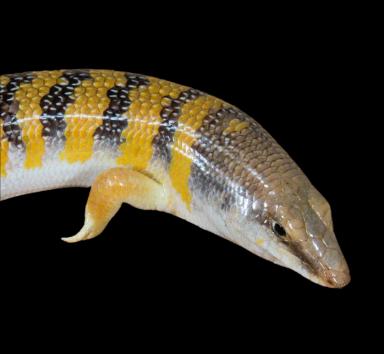
“Substrate” is another word for bedding, the material used to cover the floor of your pet’s enclosure. Since sandfish are fossorial (meaning that they like to spend most of their time underground), using the right substrate is critical to
ensuring their health and happiness. Fortunately, their ideal substrate is pretty easy to determine, as the answer is in their name!
Jurassic Sands Reptile Substrate: This dune sand is almost exactly the same as what sandfish experience in their natural environment. It’s superfine, soft, and very diggable.
Zoo Med Reptisand: Reptisand is a readily-available, low-dust sand substrate with no added dyes or chemicals. It’s made from finely ground quartz, making it silica-free and fairly similar to the sand in a sandfish’s natural environment.
Sandfish need at least 4-6” (10-15cm) of clean sand for digging, burrowing, and “swimming”. They typically stay about 1-2” (1-3cm) under the sand, and generally don’t go deeper unless digging under something like a rock, water dish, or a buried hide box. However it is speculated that they may burrow deeper into the sand to cool off or seek moisture, so that’s why we recommend a deep substrate layer.
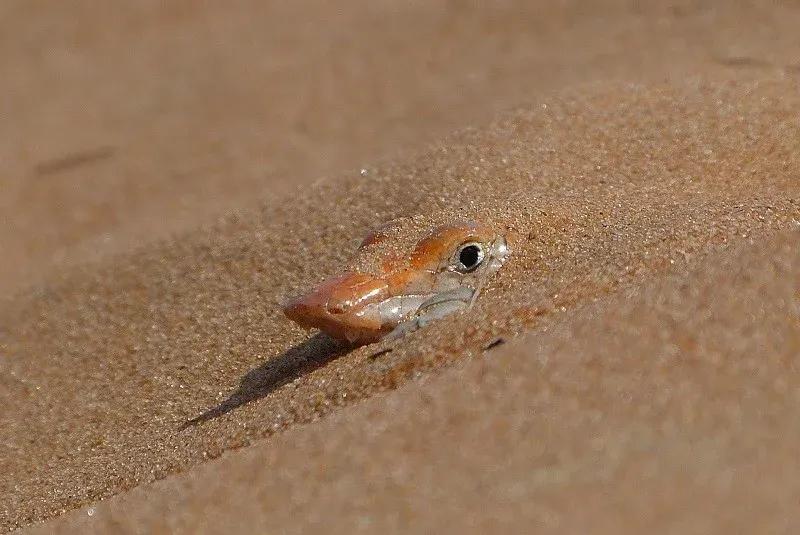
Contributed by David (moloch05) on Flickr. Note how *fine* the sand particles are!
Although calcium and vitamin sands are advertised as safe for reptiles (hint: they’re not), they should not be used with sandfish skinks because it is unknown how the main ingredient, calcium carbonate, interacts with the skink’s natural sand elimination processes.
While there is a sandblasting medium listing on the “Good Substrates” list, we do not recommend sandblasting sand because it may contain free silica particles which are known to be harmful to humans if inhaled, and may be harmful to sandfish skinks.
When in doubt, if it’s not sand, it’s not likely to be a good substrate for sandfish.
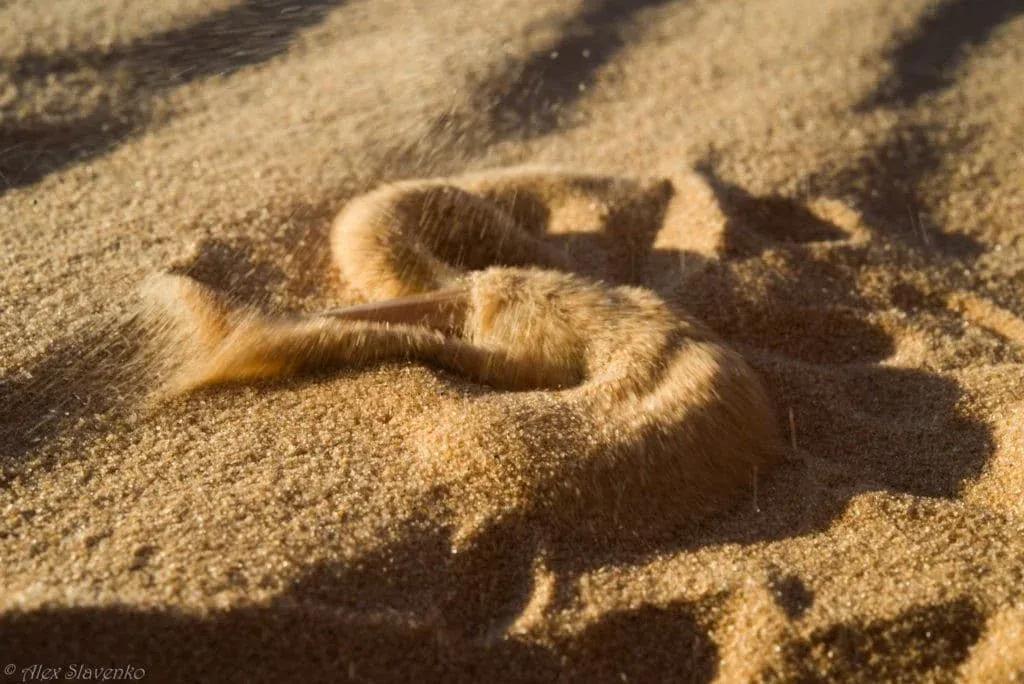
Contributed by David (moloch05) on Flickr. Note how *fine* the sand particles are!
Keeping the substrate clean is a big part of keeping your pet’s enclosure clean. Sift through the sand at least once a week with a fine mesh scoop like Zoo Med’s Repti Sand Scooper to remove poo and urate. Depending on the size of your enclosure and how dirty the sand gets, you will need to completely replace your sandfish’s substrate every 1-3 months.
This is a good time to do a thorough clean of the enclosure itself, too. Use a disinfectant like F10SC or Rescue for best results, although household ammonia is a cheap alternative that generally does a decent job. Use as directed on the product label for best results.