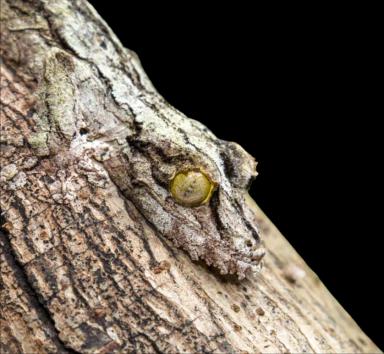
Mites are particularly common on wild-caught geckos, and because Uroplatus get easily stressed from handling, getting rid of them is especially tricky.
If you are not sure whether your new gecko is CB (captive bred), quarantine it for 4-6 weeks on paper towels, PVC pipes, and egg cartons. These items don’t make for a particularly attractive enclosure, but they are easy to clean or disposable, and make it easier to spot mites. The quarantine enclosure should be placed in a separate room from your other reptiles, and care should be taken to wash your hands and arms each time after performing terrarium maintenance. Quarantine is *very* important if you plan to keep it in an enclosure with another gecko.
After the gecko has settled into its quarantine enclosure (2-3 weeks), you may pick it up and check for mites. Keep inspections brief, but be sure to look at every nook and cranny around the gecko: eyes, ears, vent, dermal flaps, joints, etc. Do this no more frequently than once a week.
If you find leaf-tailed gecko mites, use a cotton swab soaked with vegetable or coconut oil to wipe the mites away. Follow up with a swab of providone-iodine to disinfect bite wounds.
If you find mites, clean out the terrarium before returning the gecko:
If the mites come back, repeat the above steps. If they seem to be gone by the 6-week mark, do a full treatment of the lizard and terrarium to kill any remaining eggs.
If your leaf-tailed gecko stops eating and seems stressed, hold off on further inspections/treatments until it is eating regularly and seems more comfortable.
If the mites persist, consult your veterinarian.