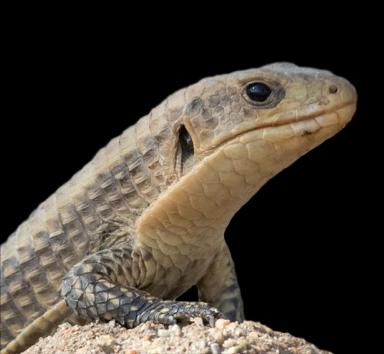
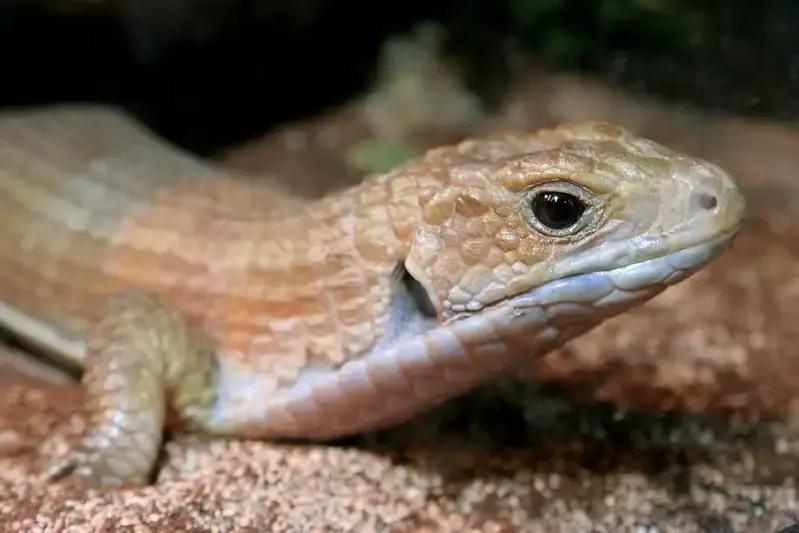
Contributed by WabbyTwaxx on Flickr
Sudan plated lizards have yet to be reliably bred in captivity, so most (if not all) of the specimens available in pet stores are wild-caught (WC) rather than captive bred (CBB). Sometimes they are captive born, which is when a pregnant female is harvested from the wild, lays her eggs, and the eggs hatch in captivity. However, as we come to understand rough-scaled plated lizard care better and they become more popular as pets, more captive-bred individuals will become available.
We at ReptiFiles advise buying directly from a breeder if possible. If not possible, look to adopt a plated lizard from a rescue or someone who has lost interest and is selling theirs. WC plated lizards are likely to carry a higher parasite load than captive-bred animals, and less likely to thrive as pets.
Avoid buying Sudan plated lizards younger than 3 months old, as older individuals are more likely to survive the stress of transitioning to a new home than younger ones.
If you are buying a Sudan plated lizard in-person, you are most likely at a pet store or reptile expo. In this setting, try to get a look at the animal up close, so you can gauge its overall health:
If you’re at a pet store, look at the enclosure:
Whenever possible, buy from a small breeder who specializes in Sudan plated lizards, not a big-box reptile distributor (Underground Reptiles, Backwater Reptiles, LLL Reptile, etc.). The narrower their focus, the more likely you are to receive a healthy, high quality animal. Some questions to ask yourself as you evaluate the breeder:
Some questions to ask about the lizard:
Of course, buying directly from a breeder often means that you have to pay more, but it’s worth the extra money to get a healthy animal. Also, buying online means that you will have to pay for overnight shipping — in the US, that’s usually around $50.