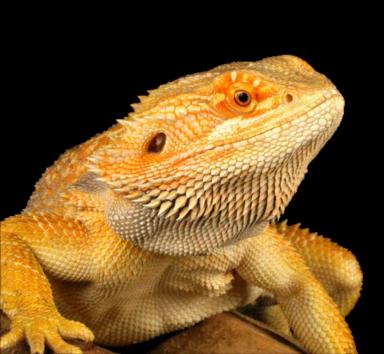
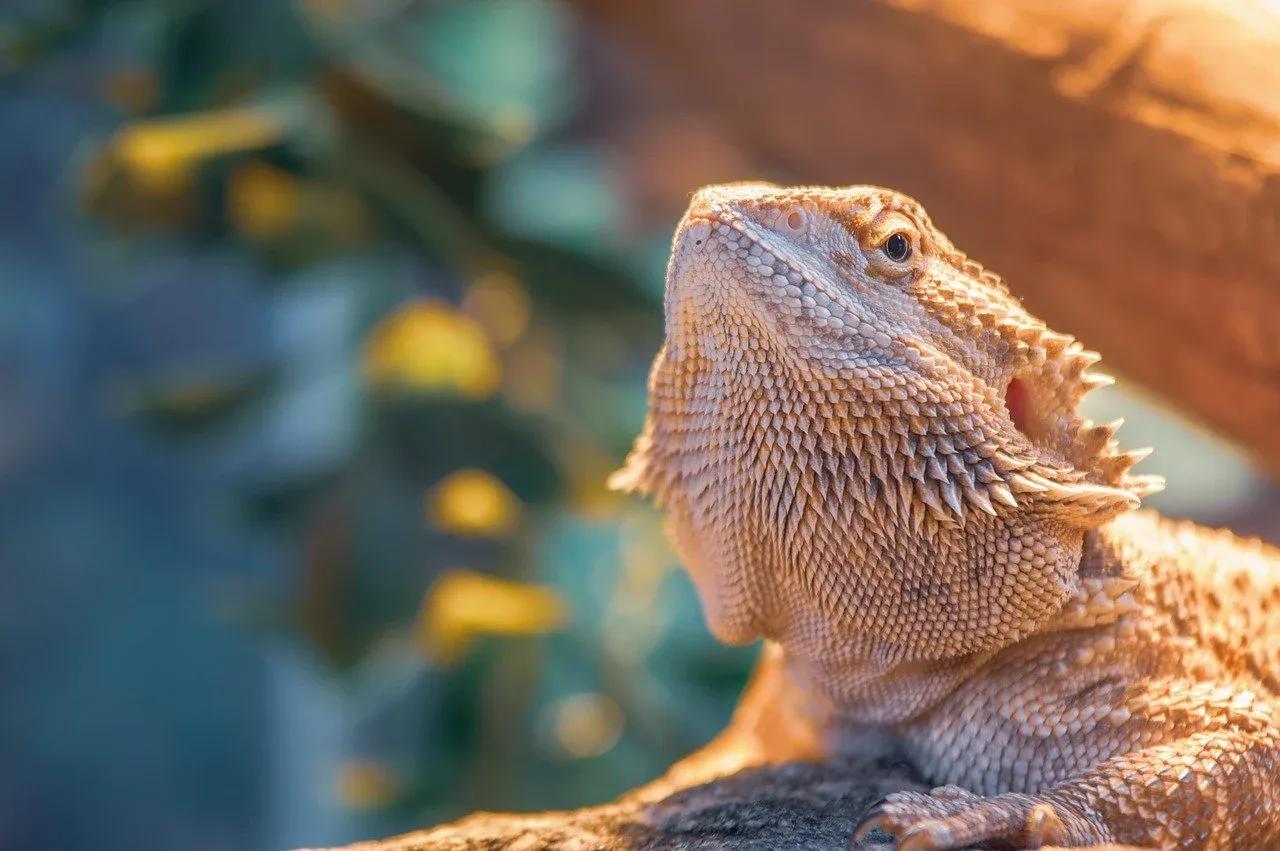
Bearded dragons are diurnal, which means that they are active during the day. And they LOVE the sun. In fact, their parietal (third) eye uses bright light to set the dragon’s circadian rhythm and activity patterns. In other words:
The following UVB bulbs are appropriate for use with bearded dragons. Pay attention to the recommended basking distances and adjustments for mesh obstruction, as UVB output/strength varies with distances and whether it’s partially blocked by mesh.
(These recommendations are an approximation based on the assumption of a ~45% mesh block. For more details on adjusting basking distance based on mesh obstruction, see the Facebook group Reptile Lighting > Guides > Guide 1: Using T5-HO lamps above a Mesh Screen.)
Extra distancing advice: If you don’t have a Solarmeter 6.5 on hand, add 1-3″ to the recommended distance to account for your specific dragon’s height. The basking area should be the highest point in the enclosure, and closest to the UVB bulb.
Make sure that your fixture does not have a piece of glass or plastic to “protect” the bulb. UVB rays are blocked by glass and plastic, rendering that bulb you just spent so much money on completely useless. Naked UVB bulbs are effective UVB bulbs! Don’t believe me? Just read this case from The Reptile Doctor.
Although not listed above, Reptile Systems-brand T5 HO UVB lamps are also reliable and approved for use with reptiles. ReptiFiles recommends using the 12% bulb in the associated Reptile Systems fixture, with the reflector positioned to your desired basking UVI. Because Reptile Systems UVB lamps work differently, approximate distancing recommendations cannot be provided on ReptiFiles at this time. Although Reptile Systems' charts are accurate when used as directed, installing them with the help of a Solarmeter 6.5 is strongly advised.
How long should the bulb be? For maximum effectiveness and safety, the bulb should be roughly 1/2 the length of your enclosure and placed on the same side as your heat lamps. For a 4′ enclosure, that means you will need a 22″ UVB bulb. For a 6′ enclosure, you will need a 34″ UVB bulb.
What about LED UVB lamps? As exciting as the idea of an LED UVB lamp is, reptile lighting experts (Frances Baines, Sarina Wunderlich, Thomas Griffiths) have determined that the technology simply isn't ready for safe use with reptiles yet — REGARDLESS OF WHAT THE MANUFACTURER MAY ASSERT!
UVB bulbs must be replaced regularly to continue to function properly. Just because it’s still producing visible light does NOT mean that it’s still producing UVB!
For more accurate monitoring of your bulb’s UVB output, I recommend investing in a Solarmeter 6.5. This will help you keep track of the UVI (UV index) within your beardie’s enclosure, and whether it is actually getting too much or too little exposure. According to experts, the optimal UVI gradient for a bearded dragon is 0 to 4.0-6.0, from lowest (furthest from the bulb) to highest (basking area). Most normally pigmented bearded dragons can tolerate UVI of up to 7.0 safely, but these levels are not necessary in captivity for optimal health. For a visualization of the optimal gradient, refer to Arcadia’s Lighting Guide for Full Sun Baskers.
NOTE — Certain morphs of bearded dragon with reduced pigmentation (hypomelanistic, translucent) or scaleless (silkback) are likely to be more sensitive to high quantities of UVB. They may need a lower-strength UVB bulb, and should be exposed to UVI of no more than 3.0 in the basking area.
Bearded dragons are known as “sun worshippers” — they are incredibly dependent on having plenty of bright white light in their enclosure. This helps promote activity, appetite, and general wellbeing.
In addition to halogen heating and UVB, your bearded dragon also needs bright ~6500K illumination in order to enjoy optimal wellbeing. Aside from making a big difference in your dragon’s health and activity, it also boosts the attractiveness of your setup.
ReptiFiles recommends the following lamps for brightening a bearded dragon enclosure. These lamps should cover 75-100% the length of your enclosure, which means that you may need multiple lamps to do the job.