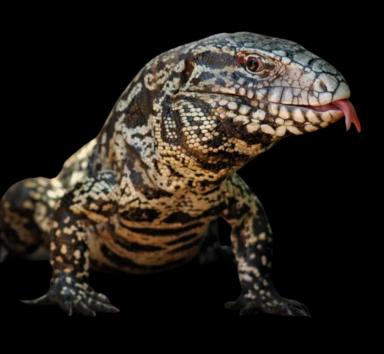

Tegus are diurnal, terrestrial lizards found throughout eastern and southeastern South America. They have also established themselves as invasive species on Fernando de Noronha Island and parts of the state of Florida in the United States.
They are characterized by their large size, triangular heads, muscular limbs, and spotted pattern arranged in horizontal stripes along the length of their body.
Argentine tegus are omnivorous, meaning that they eat both plants and animals. Colombian tegus are carnivorous, meaning that they eat primarily animals. Tegus are very active opportunistic hunters, hunting their own prey as well as scavenging carrion where it is available.
Depending on the species, tegus grow to be between 24”-60” (61-152 cm) long, weighing 8-15 lbs (3.6-6.8 kg). They are considered “large” lizards, and have special care considerations owing to that size.
Tegus are sexually mature at 3 years old and go on to have an average lifespan of 15-20 years.
The lizards we recognize as tegus were classified under the same genus (Tupinambis) until 2012, when three of the species were reclassified under the genus Salvator. Because of their similar care requirements and the frequency with which these species get confused, this care guide addresses tegus of both the Salvator and Tupinambis genera.
Those marked with asterisks (*) are most common in the pet trade, and will be directly addressed in this guide.
Please note that although pet tegus are becoming increasingly popular, tegus are NOT “scaly puppies” — they are still reptiles with the unique needs that having an exotic animal presents. Tegus are expensive to feed and house, and they go through a “puberty”-like adolescent phase where they become thoroughly unpleasant to deal with. They can become “dog tame” with time and persistent effort, but even dogs and cats occasionally bite and scratch, and even a tame adult tegu will bite/scratch/tail whip if it feels scared or threatened.
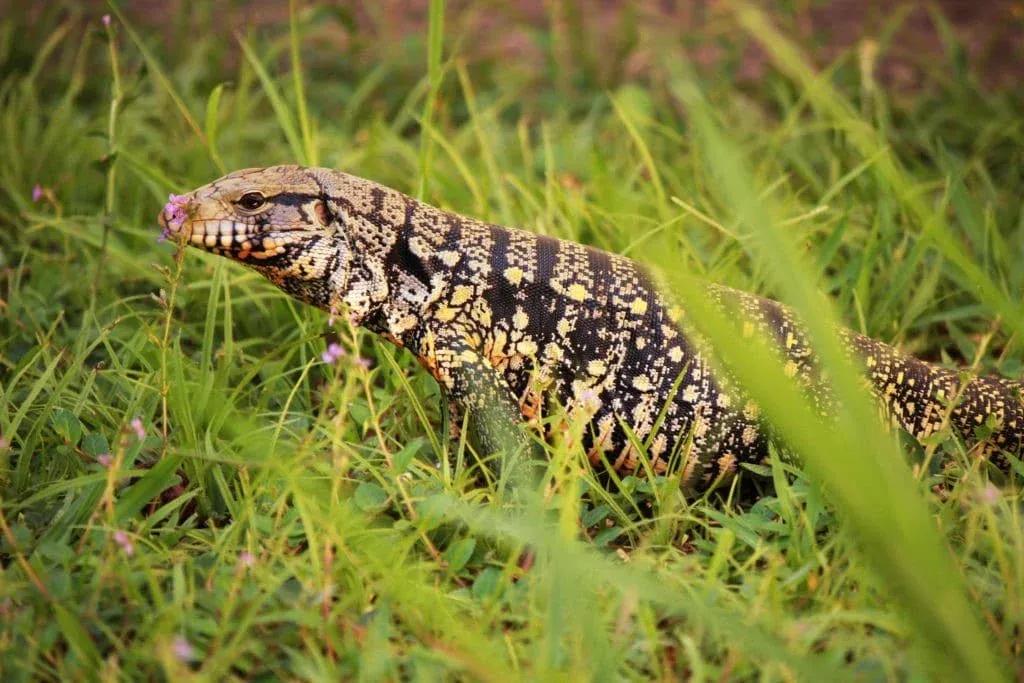
“2” by Ariosvaldo Gonzáfoles is licensed under CC BY 2.0