Snakes are cold-blooded, which means that they don’t produce their own body heat like humans do. Instead, they rely on the temperature of their environment for the heat they need to move, digest, etc.
There is no one “ideal” hognose temperature. Instead, they need a range of temperatures inside the enclosure so that they can warm up and cool down when they feel like it.
Eastern and Southern hognoses —
Western hognoses —
65°F/19°C is likely to be a better nighttime minimum for southern hognoses.
Measure and keep track of the temperatures in your snake’s enclosure with a pair of digital probe thermometers: one probe on the basking spot, and another on the cool end of the setup.
Conventional wisdom for achieving the right hognose temperature is to use a heat mat, and some people will argue in favor of heat mats until the day they die. But nature doesn’t have heat mats, and temperatures underground tend to be *cooler* than temperatures on the surface, not warmer. Heat mats also have trouble penetrating the thick layer of bedding required for hognoses and often don’t affect air temperature.
Instead of using a heat mat, use a heat lamp like the Zoo Med Mini Combo Deep Dome fixture to create the temperatures that your snake needs. To best create a temperature gradient, place it on the far end of the enclosure — temperatures will naturally get cooler farther from the heat source. Many reptile keepers use halogen floodlight bulbs instead of reptile-specific bulbs because they tend to last much longer than the ones you get at the pet store. Go figure!
I wish I could give you a direct answer, but it depends on the size of your enclosure and how far away the light is installed from the basking surface. Generally speaking, a pair of 50w halogen flood bulbs like the Arcadia Halogen Heat Lamp is a good place to start. Using two bulbs rather than one create a larger basking area with more even heating for your snake to warm up more efficiently. But be aware that you may need to increase or decrease the wattage in order to get the right temps.
Hognose snakes have also been observed basking on rocks in the wild, so placing a flat stone underneath the heat source will help them warm up more efficiently.
Hognose snakes don’t need any kind of “night bulb” to keep them warm at night. These products were developed back in the day when we believed that reptiles needed to stay warm when their normal heat lamps were turned off. Providing a nighttime heat bulb can prevent a diurnal reptile from sleeping well, weakening their health.
Heat rocks (also known as hot rocks/rock heaters/etc.) are manufactured and distributed under the same premise as an electric blanket — convenient heat whenever your reptile needs it. Sounds like a great idea, right? However, heat rocks are notoriously unreliable, and many a reptile has lost its life due to severe burns caused by these devices. They’re also not a good choice for heating your enclosure, as it only warms the rock’s surface, not the surrounding air.
For best health, hognose snakes should be cooled and allowed to brumate for 2-3 months each winter. For information on brumation and how to do it, visit this page.
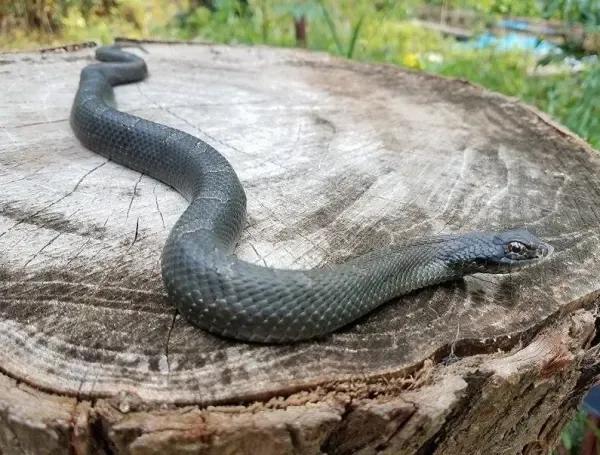
Eastern hognose. Photo contributed by Krista Childers.
This page contains affiliate links.