Product Review: Kages Hide Box
September 6, 2024
ReptiFiles received a free Kages Hide Box in exchange for an honest review, whether positive or negative. The review below is my honest, unbiased opinion, but it does contain some affiliate links. To learn why I use affiliate links on ReptiFiles, read here.
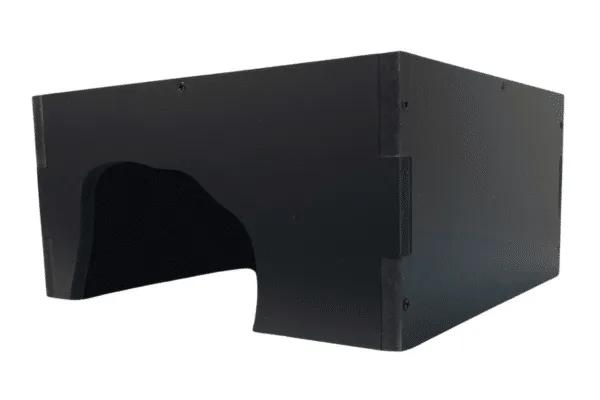
“Hides,” or hiding places, are key to helping reptiles feel secure in their environment. Reptiles instinctively seek out hiding places in the wild because they provide essential protection from predators as well as from extremes of temperature and dehydration. And whenever possible, multiple hiding options are preferred so they can pick a covered location that best suits their needs at any given moment.
Reptiles are rarely comfortable out in the open, but when a reptile is voluntarily sitting out in broad daylight, it’s usually because it feels safe and there are plenty of hiding options nearby. This is why you may have heard experienced keepers tell you that the more “clutter” you add to an enclosure, the more you are likely to see of your pet. It is never acceptable to take away hiding options just to stay visible — this is VERY stressful to the animal and a major violation of welfare.
Many care guides (including those on ReptiFiles) include a default recommendation of at least 1-2 hides in an enclosure, depending on species. This is meant to be in addition to other types of cover within the enclosure. Here’s a brief rundown of the different kinds of hiding places that can be utilized in a reptile enclosure’s layout.
Non-naturalistic artificial: These are typically plain plastic hide boxes made strictly for function rather than aesthetic appeal. They are often relatively inexpensive, easy to clean, and a good foundation for creating a custom, more naturalistic that blends in better with the intended environment. They may come in one piece or require some assembly.
Naturalistic artificial: Often made to look like plants, rocks, caves, or logs, these hides are both functional and aesthetic. Due to their aesthetic aspect, they are typically more expensive and the paint can wear off over time. Ease of cleaning varies by material and complexity of design. They usually arrive ready to use out of the box.
Foreign artificial: These are hides made to look like something manmade or as a pop culture reference. Attractiveness is the priority, which may or may not compromise functionality as a hide. Strength, ease of cleaning, and longevity are also highly variable. These are generally more expensive.
Natural: Natural hides can be created with live plants, cork flats/rounds, rock stacks, leaf litter, and similar materials. They provide ranging degrees of cover while supporting a naturalistic enclosure aesthetic and avoiding the use of artificial materials. These come in very wide range of sizes, but can be relatively delicate and may degrade over time. They are also usually difficult to clean.
I like to use as many different types of hide as possible when setting up an enclosure. For example, my viper gecko enclosure uses dragon stone, live foliage, wood, and a decorative artificial hide to create an environment with lots of complete and incomplete cover. Despite having lots of opportunities to stay out of sight, I see them out every day and they don’t act stressed when I walk by or perform routine maintenance.
Who is Kages?
If you’ve been in the reptile hobby for a while, Kages (also known as Reptile Kages) should be a familiar name to you. Kages has made a name for themselves with their diverse sizing, deep substrate dams, easy assembly, and sheer popularity. Recently Kages has come under new management, and they’re eager to make Kages the best PVC enclosures on the market by bringing a formerly stagnant design into the modern day.
ReptiFiles has already reviewed their updated Premium White PVC Reptile Enclosure, but today we’re actually talking about a different product from their inventory: the Kages Hide Box.
Product Specs
- Made from scrap PVC (eco-friendly)
- Available in black or white
- Does not come pre-assembled
- Screws included
- Waterproof
- Measures 11 5.8”L x 11 5/8”W x 6”H
- Opening measures 6”W x 4”H at largest
- Costs $35 as of September 2024
Discussion
Unboxing & Assembly
The Kages Hide Box is shipped in pieces that need to be assembled before use. It looks a bit like a very simple 3D jigsaw puzzle, carefully packed in bubble wrap and with the pieces protected by a film on one side to help guard against scuffing/scraping during shipping. The film comes off very easily and is not an obstacle. Each of the pieces is also labeled, so as long as you know how the hide is supposed to look, it doesn’t take a genius to figure out what goes where.
A bag of screws is included to fix everything in place, and there’s a QR code to assembly instructions on the bag. I appreciate that this hide screws together rather than requiring glue, since that means the hide can be used immediately after assemble.
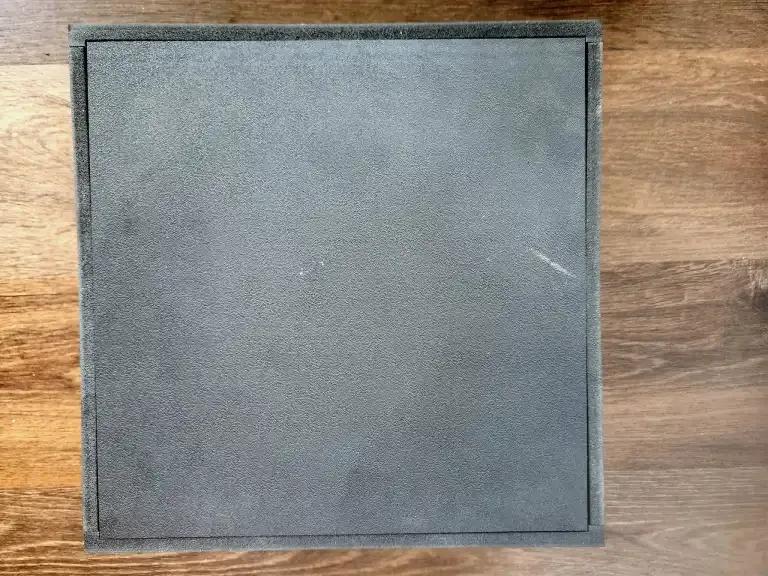
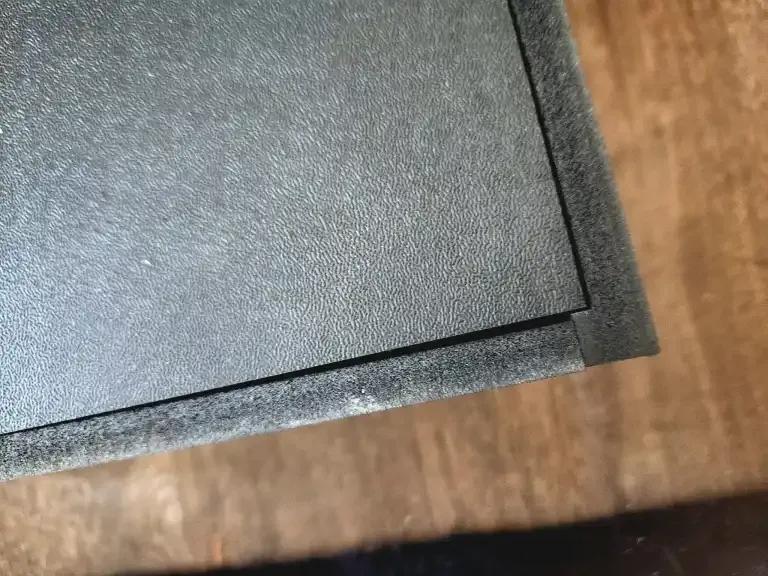
The wall pieces fit VERY tightly together, which means that you may need a mallet to assist assembly. I wouldn’t call this a problem, just something to be aware of. That said, the final fit isn’t actually a perfect sea. In the end, the edges and especially the top looked a bit rough. It’s hard to say whether this is the result of a flaw in design or just user error on my end. Given my track record with building things, let’s call it user error (just ask my husband, haha). I will say, though, that I would have liked 2 screws per side for attaching the top rather than just one, as this may have resulted in a more seamless final look.
Design & Functionality
This is a very basic hide box — the only thing naturalistic about it is the irregular shape of the entry, so it’s definitely made more for function than aesthetics. What makes it stand out, though, is its sheer sturdiness. With thick PVC walls and hardware to keep it together, this thing can be reasonably expected to potentially last decades. The first things to go would probably be the screws if kept in a particularly wet environment. This is definitely a sharp contrast to the cheaper but thinner black box hide design, which are more disposable. The thick PVC walls are also great at maintaining a stable climate on the inside, which is an optimal feature for any hide designed to mimic a burrow.
The opening on the Kages hide box is larger than usual for this type of hide, particularly regarding width. This is a great choice, in my opinion, as it makes the hide more versatile than your typical cheap black box hide, which is designed with snakes in mind and has a relatively small opening and low ceiling. This means that the Kages hide box can accommodate thicker/fatter/wider reptiles (such as bearded dragons and chelonians) without problems.
This is not an enclosed hide, which means that it’s open on the bottom for easier cleaning and access. If one wanted to make this a top-access hide, all you would have to do is not screw it in. However, if you wanted to go this route, I’d recommend adding a handle of some kind to make the top easier to remove. Bottom line, though, it’s best to avoid forcibly removing a reptile from their hiding place whenever possible, as this is highly stressful and can damage the trust relationship between animal and keeper.
One cool thing about box hides is that they have a lot of potential as a blank canvas. Slather the exterior in silicone, and you can adhere any material you want to it to make it blend in better with a naturalistic enclosure: sand, coconut fiber, sphagnum moss, gravel, etc.
Additional Notes
I did a bit of market research, and $35 is definitely on the steep end for a large hide box around these dimensions compared to other pet store-grade options, but if you look at Kages’ closest competitors for this type of product, it places somewhere in the middle to low end of the spectrum.
Summary
Things I Liked About the Kages Hide Box
- Packed mindfully. Bubble wrap is kind of standard, but I always appreciate protective film.
- Straightforward assembly. With the labeled pieces, instructions for putting this together are all but unnecessary.
- Built to last. These hides are STRONG — not that this is a particularly important fact, but an average-sized person could probably use one of these as a low stepstool. The durability of the material means that it’s unlikely to wear out for decades, unlike most less expensive equivalents.
- Great at holding both warmth and humidity. This makes these hides highly climate-stable like the burrows and hiding places reptiles tend to prefer in the wild.
- Wide entrance. This hide can accommodates wider species without making them feel too exposed.
- Blank canvas for customization. Although perfectly functional on its own, this hide also has lots of potential as the foundation for an easy DIY project.
- Eco-friendly. It’s always nice to see a manufacturer re-purposing their scraps!
Things I Didn’t Like About the Kages Hide Box
- Relatively high ceiling. Shorter/smaller reptiles may not be able to feel sufficiently secure in this hide.
- Might look a bit rough on completion. But that may depend on your DIY skills and how closely you’re looking.
- Somewhat more difficult to clean. The sharp corners are more difficult to clean than rounded corners of one-piece hides.
- No extra screws included. In other words, if you lose one, you’ll have to source your own replacement.
- Only one size available.
Conclusion: A stronger, more versatile alternative to the traditional black box hide
ReptiFiles Rating: 4.5 stars
It’s a little strange to be reviewing a reptile hide, since at first glance, a hide is a hide, right? But upon closer inspection there’s a lot of little things that can influence a purchase decision, and make or break the resulting experience with the product. This was my experience with the Kages hide box.
As a plain plastic box hide, its main selling points are its durability and versatility, and it outperforms its closest competitors on both of those points. As for the downsides, you might have a bit of difficulty cleaning gunk out of those inner corners without taking the thing apart, and that 6” of height might be too much for shorter/smaller species. The Kages hide box has been in my big Merauke blue tongue skink’s enclosure for at least a few weeks now, and he has yet to warm up to it. These complaints are overall minor, but they are just enough to bar this hide box from perfection.
It would be nice to see more options for this hide, especially for larger reptiles since it’s generally difficult to find hides that can accommodate them. Of course, that may defeat the eco-friendliness of this product since they’re made from scraps, but considering that most keepers of larger reptiles have to DIY their own hides, there’s definitely an available market.
What reptiles can use the Kages Hide Box?
Medium-sized terrestrial lizards <2’ long, slender-bodied snakes <6’ long, thick-bodied snakes <5’ long, and small turtles & tortoises with a width of less than 6” and height less than 4” should be comfortable in this hide. For example:
- Ball pythons
- Bearded dragons
- Blue tongue skinks
- Boa constrictors
- Box turtles
- Bredl’s pythons
- Burmese pythons (juvenile)
- Carpet pythons
- Greek tortoises
- Reticulated pythons (juvenile)
- Russian tortoises
- Tegus (juvenile)
**click any of the above links to see a ReptiFiles care sheet/manual on the mentioned species**
NOTE: As with all hides, reptiles that are significantly smaller than the box itself (ex: juveniles) are likely not to feel sufficiently secure in this hide. This hide is also not recommended for crevice-dwelling species like ackie monitors, uromastyx, chuckwallas, and pancake tortoises.
Mariah’s Tips for Success
- Use a drill with a Philips head for assembly, rather than just a screwdriver.
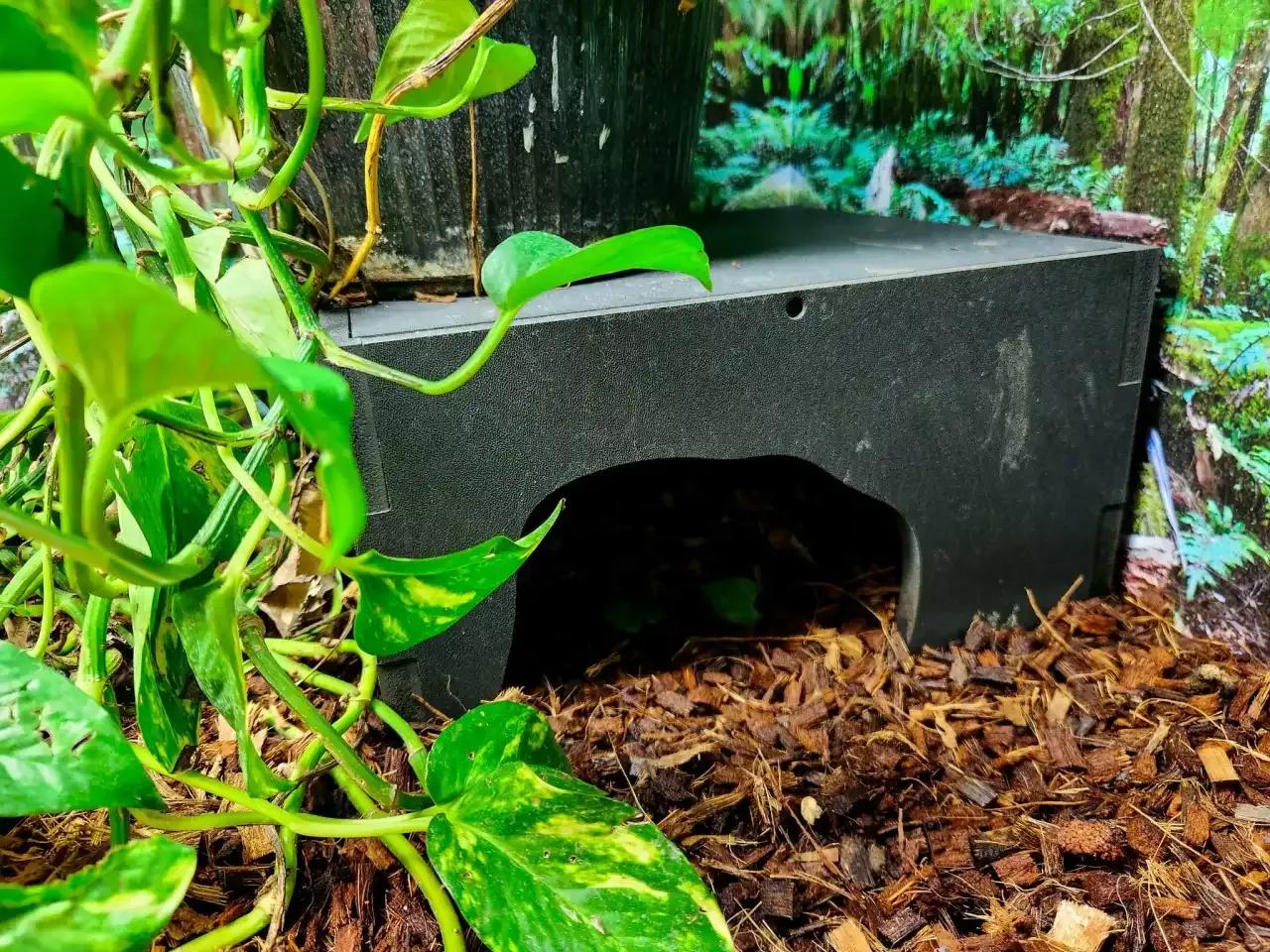
- For best results, place a piece of rough textured, light-colored stone on top to prevent direct contact between the heat and UV lamps and the plastic. This also transforms the hide into an elevated basking surface!
Comments
Authenticated users can leave comments on this post. All new comments are given the status "draft" until they are approved by an admin. Draft comments are not accessible to the public and will not show up on this page until it is marked as "published". To manage all comments, navigate to the admin dashboard.